
You're Not on the List: Why Reputation Management Is the New Top-of-Funnel

Updated: Apr 30

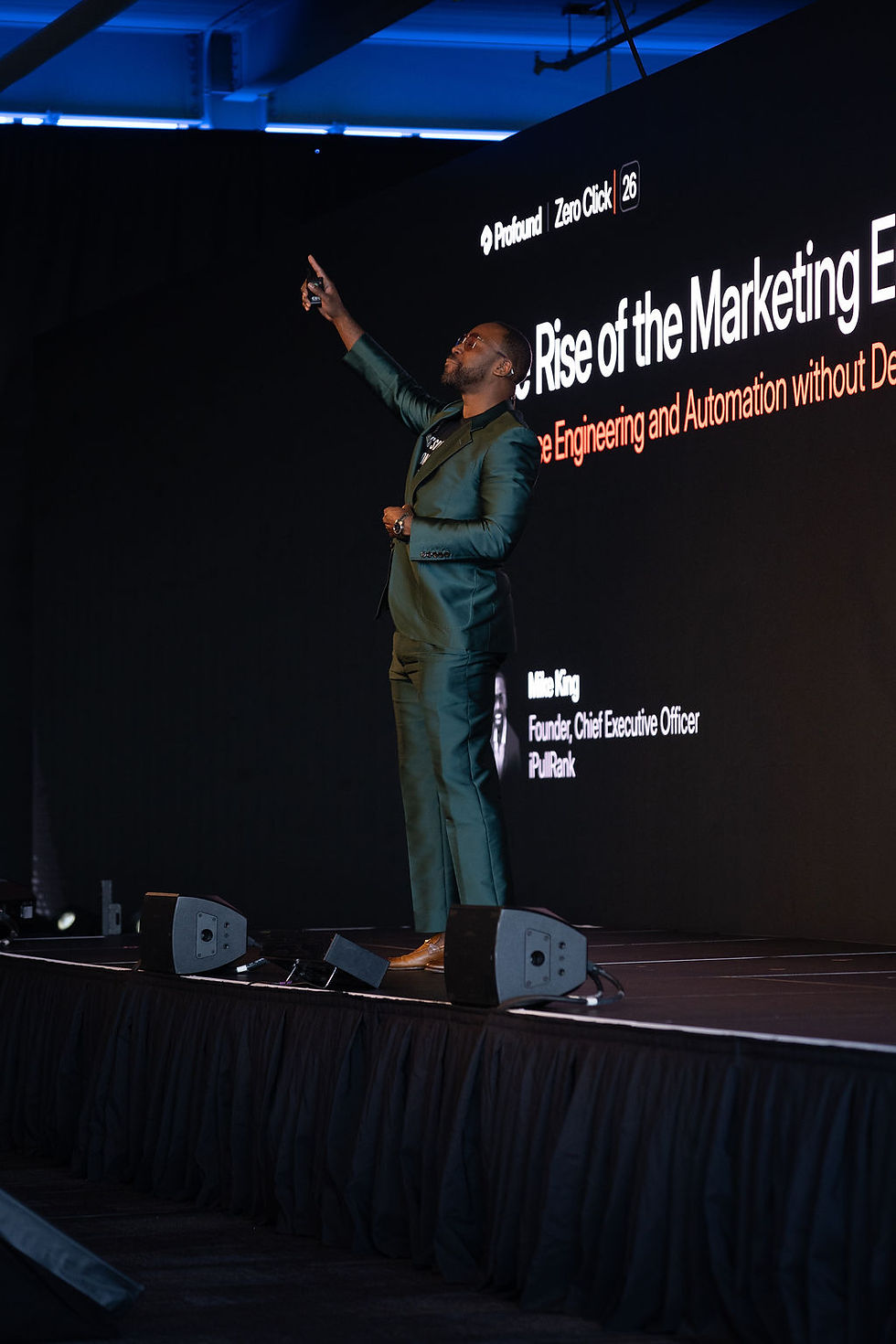
I thought I understood reputation management. Then I walked into Profound's Zero-Click event in San Francisco last week. And everything shifted.
What I thought was peripheral turned out to be foundational. The reputation signals that matter: reviews, citations, verified proof points, aren't nice to have. They're how agents recommend companies and how LLMs cite you. Essentially, it's how you show up when someone asks an AI for solutions. Not a small thing at all.

So here's the situation: You're not on the list.
Not the top ten personal finance companies. Not the shortlist your buyer's considering. Not the three solutions an AI agent recommends when someone asks, "What should I use?"
Here's what changed: it used to matter how you got on the list. You pitched journalists, won awards, then amplified that coverage everywhere. The list was a marketing asset.
Now the list is where consideration starts. And you don't control it anymore.
Most people don't build their own shortlists anymore. LLMs do. Agents do. They surface the top ten because that's what buyers ask for. And if you're not in that top ten, you're probably not even in consideration.
It's no longer about reach, it's about credibility. And it changes what you actually have to build and how you resource against it.
Old Way of Thinking | New Approach |
Get featured on top ten lists so we can amplify it out and boast about it. | Become the kind of company that LLMs naturally surface as a top choice. |

What Agents Actually Cite and Why Reputation Management is Key to Visibility
Tim Saunders from G2 stood on stage at Profound's Zero-Click event last week and broke down what actually drives agent recommendations. 51% of B2B buyers start their journey on AI now. More buyers start with shortlists than ever before.
And here's what gets cited: verified reviews. Earned media. Trust signals from credible sources.
Less weight goes to "best of" lists. More weight goes to validated content, verbatims from real users, context summaries, FAQs built from actual feedback. Natural reviews carry the most influence.
Agents aren't swayed by persuasive copy. They're influenced by verifiable facts. Asad Awan from OpenAI said it clearly: the native experience isn't keywords or retargeting. It's understanding context and matching with user intent.
That means your job isn't to convince an agent. It's to give it the factual foundation it needs to recommend you.
If your reputation signals are thin, few reviews, no earned media, vague claims, you're invisible. The agent moves on to someone with more proof.
The Infrastructure Shift
Marketing used to be about shaping perception. Now it's about structuring proof.
The companies winning agent visibility aren't the ones with the best ad campaigns. They're the ones with the cleanest data, the strongest review profiles, and the most credible third-party validation.
Jeff Titterton from Stripe and Sonya Huang from Sequoia talked about this shift in the context of agent commerce. Agents collapse funnels into simple trust decisions. They need structured data showing company trustworthiness. Product catalog feeds matter, data that can't be misread. Pricing has to be clear. Reviews have to be real.
And here's the thing most marketing teams miss: third-party data about you is already out there. LLMs are aggregating it whether you're managing it or not.
The problem? That data might be wrong. Outdated. Incomplete. And if agents are citing incorrect information about you, you've lost control of your own narrative before anyone even clicks.
Reputation management isn't a PR afterthought anymore. It's the content infrastructure that drives agent visibility.
What’s
What You Actually Build
So what does this look like in practice?
First: audit what's actually being said about you. Not just on your website. Everywhere. BBB, Trustpilot, G2, Reddit, industry forums, LinkedIn discussions. That's what agents are aggregating. If the information is thin, contradictory, or missing, you're giving agents nothing to cite.
Second: turn reviews into content. Not marketing copy. Actual verbatims from users. Tim Saunders was specific about this: use testimonials and feedback to build context summaries, FAQs, and category pages that answer real questions. The content that agents cite most is the content that reflects what real people actually say.
Third: prioritize earned media over owned media. PR isn't about vanity metrics anymore. It's about citations. Less than 3% of citations come from tier-three publications. Tier-two outlets (trade pubs, credible industry blogs) get the most citations. The New York Times and Bloomberg block AI access. The middle tier is where you win.
Rob Gage from Reddit put it this way: it's not about who you know or what you say. Agents evaluate credibility the same way Reddit evaluates community fit, by listening to what other people are saying about you, not what you're saying about yourself.

Fourth: structure your data. Agents need clean, accessible information. Product catalogs. Pricing tables. Feature comparisons. If your data is buried in PDFs or locked behind forms, agents can't cite it. And if they can't cite it, they recommend someone else.
The companies that treat reputation as infrastructure, not as a nice-to-have, are the ones showing up in agent recommendations.

TOFU Isn't About Reach Anymore
One insight from the event kept coming back: TOFU isn't about reach. It's about shaping attitudes earlier. Before the click.
That changes everything. (Including how I used to think about SEO).
If the goal used to be getting in front of as many people as possible, the new goal is making sure agents have the right information about you when they're building recommendations.
You're not optimizing for impressions. You're optimizing for credibility.
And credibility isn't something you claim. It's something you build through proof points that agents can verify.
The shift is structural. Marketing teams that move from amplifying placements to building verifiable credibility don't just get more visible. They get fundamentally different outcomes.
What is AI agent visibility?
AI agent visibility is how often your company appears in AI-generated recommendations when users ask tools like ChatGPT or Google AI Overviews for solutions.
How do AI agents decide what to recommend?
They rely on verifiable signals such as reviews, earned media, and third-party mentions. They prioritize consistent, trustworthy information over brand messaging
Why are reviews more important than "top ten" lists?
Reviews reflect real user experiences and are harder to manipulate. AI systems treat them as more reliable than curated or promotional lists.
What signals matter most for AI recommendations?
The strongest signals include:
Verified customer reviews
Credible media coverage
User discussions in forums and communities
How can companies improve their AI visibility?
Start by auditing your reputation across platforms, then invest in review generation, earned media, and structured content that reflects real user feedback.
Why is reputation now part of top-of-funnel marketing?
Because AI agents shape buyer consideration before users visit your site. If your reputation signals are weak, you may never be included in the decision set.
What All of This Means for You and Your Org
If you're building for the next two years, here's where to start.
Audit your reputation signals. What shows up when someone searches for you? What reviews exist? What earned media mentions are out there? What's missing?
Invest in the infrastructure. Clean data. Verified reviews. Context summaries. FAQs built from real feedback. The stuff that agents actually cite.
Stop treating reputation as a side project. It's not PR cleanup. It's the foundation of your visibility in an agent-first world.
The companies that understand this early are the ones that show up on the list. The ones that don't are the ones wondering why they're not in consideration.

Why Profound Put This Event On
Profound hosted this event because they're building for the future of marketing work, specifically, agentic workflows that let marketers operate at scale. The concept of the Marketing Engineer came up repeatedly at the conference: the person who translates marketing requirements into workflows that agents can execute.
What surprised me was how many speakers circled back to the same insight: the top of the funnel isn't changing because of new tools. It's changing because of what agents actually cite. Reputation. Reviews. Credibility signals. The stuff that doesn't require a marketer to amplify it, it just requires you to be credible enough that agents reference it.
That's the foundation Profound is building on. Because marketing at scale through agents requires trustworthy, accessible information everywhere—reputation signals, content, social proof, and the workflows that connect them.
It's where we come in. At HiveStir, we help brands build the content and social strategy that generates those reputation signals. Because the companies winning agent visibility aren't the ones with the fanciest tools. They're the ones with the strongest proof points, and that starts with strategy, not tactics.
Ready to build your content strategy today? Get in touch with us today!
This article was created by HiveStir with a little help from Claude.


Comments